The European Union (EU) has agreed to end all imports of Russian oil and gas by 2028, marking a major stride toward energy independence and further isolating Moscow’s war-fueled economy.
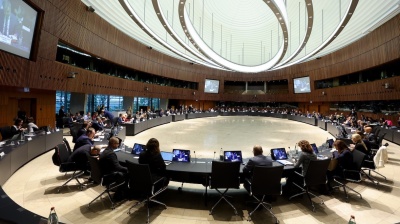
The decision, reached by EU energy ministers on Monday during a meeting in Luxembourg, represents one of the bloc’s most ambitious energy reforms since Russia’s invasion of Ukraine in 2022. The plan aims to eliminate Europe’s lingering dependence on Russian fossil fuels — a source that has long powered the continent but also financed the Kremlin’s war efforts.
Under the new framework, no new Russian gas contracts will be permitted from January 1, 2026, while imports of both pipeline oil and liquefied natural gas (LNG) will be completely banned by 2028. The legislation, a core component of the EU’s REPowerEU roadmap, still requires approval from the European Parliament, though it is expected to pass smoothly.
The Council of the European Union said in a statement that the agreement sends a strong signal of Europe’s determination to build a secure and independent energy future.
Denmark’s energy minister, Lars Aagaard, whose country currently holds the EU’s rotating presidency, described the deal as crucial for the continent’s security.
“Europe has made progress in cutting Russian gas and oil from our markets, but this agreement ensures we finish what we started. A self-reliant Europe is a safer Europe,” Aagaard said.
To support the transition, each member state will be required to submit a national diversification plan detailing how it will secure alternative supplies and prevent potential disruptions. Countries that no longer import Russian energy will be exempt.
The regulation also introduces new information-sharing systems between EU governments, the European Commission, and the EU Agency for the Cooperation of Energy Regulators (ACER). A review will take place two years after implementation, while a temporary suspension clause allows for flexibility if severe energy shortages occur.
While most EU members supported the plan, Hungary and Slovakia — two countries still heavily reliant on Russian energy and maintaining close ties with Moscow — voted against it. Their opposition, however, could not block the measure, which passed with a qualified majority of member states.
Before the war in Ukraine, Russia supplied about 30 percent of the EU’s oil and a significant portion of its gas. Those figures have since plunged: Russian oil now accounts for roughly 3 percent of EU imports, while gas has dropped to 13 percent, worth around €15 billion ($17.5 billion) annually, according to the European Council.
Analysts say that although the ban may not severely impact Russia’s overall energy revenue — given its growing exports to China, India, and Turkiye — it underscores Europe’s long-term commitment to reduce dependence on Moscow and accelerate investment in renewable and diversified energy sources.
If endorsed by the European Parliament in the coming weeks, the measure will formally end the EU’s reliance on Russian energy within three years — a turning point that could redefine Europe’s geopolitical and economic landscape for decades to come.

-
EU sets 2028 Deadline to end reliance on Russian Energy
The European Union (EU) has agreed to end all imports of Russian oil and gas by 2028, marking a major stride toward energy independence