Global finance leaders gathering in Washington, D.C. this week for the annual meetings of the International Monetary Fund (IMF) and the World Bank are facing renewed uncertainty following fresh trade tensions between the United States and China.
The meetings, which traditionally focus on promoting global economic stability, policy coordination, and sustainable development, have been overshadowed by United States President Donald Trump’s latest threat to impose 100 per cent tariffs on Chinese imports. The move, announced just days before the high-level gathering, has reignited fears of a full-scale trade war between the world’s two largest economies.
According to Reuters, the proposed tariffs come in response to Beijing’s new export restrictions on rare earth minerals, which are vital for technology manufacturing and defense industries. The new measures, expected to take effect on November 1, have already unsettled global financial markets, sparking worries about disruptions to supply chains and manufacturing output.
Market observers caution that the renewed trade conflict could reverse the modest progress achieved in recent months after diplomatic efforts between Washington and Beijing led to tariff reductions and an improvement in global growth forecasts. The fragile peace between both nations had been viewed as a stabilising factor for the global economy, especially amid persistent inflation, tight monetary policies, and slower growth across major economies.
Despite the growing tensions, United States Treasury Secretary Scott Bessent sought to calm markets on Monday, expressing optimism that both countries would continue to engage constructively. He confirmed that President Trump and Chinese President Xi Jinping are still expected to meet later this month in South Korea, adding that technical discussions between both governments will also take place on the sidelines of the IMF and World Bank meetings.
“The 100 per cent tariff does not have to happen,” Bessent told Fox Business Network. “The relationship, despite this announcement last week, is good. Lines of communication have reopened, so we’ll see where it goes.”
His reassurance helped ease investor concerns, triggering a partial rebound on Wall Street, with the Nasdaq Composite Index rising by more than two per cent in early trading after steep losses recorded on Friday. Markets had been rattled by fears that renewed trade hostilities could derail the fragile global recovery and exacerbate inflationary pressures.
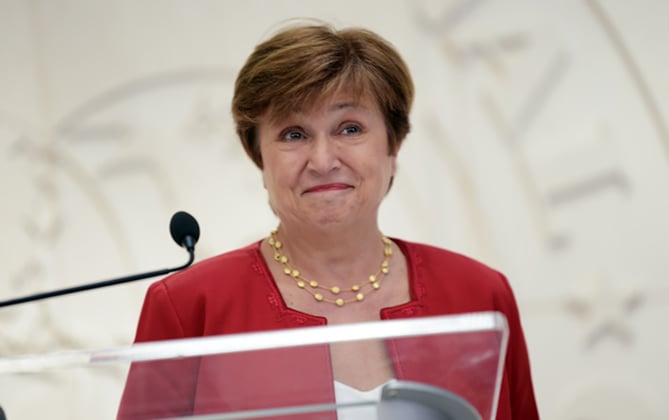
Meanwhile, IMF Managing Director Kristalina Georgieva stated that the global economy has shown remarkable resilience despite the combined challenges of geopolitical tensions, monetary tightening, and uneven job growth in advanced economies. However, she cautioned that the outlook remains fragile and uncertain.
“Downside risks continue to dominate the forecast,” Georgieva said in her pre-meeting remarks. “The global economy has avoided recession, but growth remains weak and uneven across regions.”
The IMF is expected to release its latest World Economic Outlook report this week, projecting global GDP growth of about three per cent for 2025, only slightly below the 2024 rate. The report is also likely to highlight persistent challenges such as rising debt burdens in developing nations, volatile commodity prices, and weak investment flows.
The annual IMF and World Bank meetings, which attract more than 10,000 delegates from over 190 countries, bring together finance ministers, central bank governors, and global development experts to discuss pressing global issues. However, this year’s event is now expected to be dominated by the escalating trade dispute between Washington and Beijing, and its potential impact on the world economy.

-
Global Finance Leaders alarmed as U.S China Trade Tensions Resurface
Global finance leaders gathering in Washington, D.C. this week for the annual meetings of the International Monetary Fund (IMF) and the World Bank are