.
The Federal Government is in advanced discussions with the Export-Import Bank of China for a $2 billion loan to finance a new electricity super grid — a transformative project aimed at overhauling Nigeria’s fragile power transmission network and restoring investor confidence in the energy sector.
Minister of Power, Adebayo Adelabu, disclosed this during an economic summit held in Abuja on Monday. He explained that the proposed super grid is a central component of the Tinubu administration’s renewed strategy to stabilise power supply, decentralise electricity generation, and boost industrial productivity.
According to the minister, the new grid will connect the eastern and western regions of the country — where most of Nigeria’s heavy industrial and commercial consumers are based — thereby improving the stability and efficiency of power distribution nationwide.
“It’s part of plans to decentralise power generation in Nigeria and get the heavy commercial users that left the power grid because of its unreliability to return,” Adelabu said.
Bloomberg reported that negotiations between Nigeria and China’s Exim Bank are progressing steadily, with cabinet approval already granted for the financing arrangement. The agreement, once finalised, will be one of the largest foreign-backed power infrastructure investments under President Bola Tinubu’s administration.
Nigeria’s power sector has long been plagued by inefficiencies, frequent grid collapses, and limited generation capacity. Although the country has an installed capacity of about 13 gigawatts, only around 4 gigawatts typically reach consumers due to transmission bottlenecks, poor maintenance, and systemic losses. In contrast, South Africa — with a population roughly a quarter the size of Nigeria’s — operates an installed capacity of nearly 70 gigawatts, underscoring the vast infrastructure gap between both economies.
As a result, thousands of Nigerian businesses have resorted to self-generation using diesel or gas-powered generators. Analysts estimate that self-generated electricity now accounts for almost half of Nigeria’s total energy consumption — a costly and environmentally unsustainable alternative that continues to weigh heavily on production costs and inflation.
Since assuming office in May 2023, President Bola Tinubu’s administration has embarked on sweeping economic reforms, including the removal of fuel subsidies, the liberalisation of the foreign exchange market, and a comprehensive overhaul of the tax and tariff system. In the power sector, the government approved targeted tariff adjustments for select urban consumers, designed to enhance the financial sustainability of distribution companies and attract private investment into the energy value chain.
Adelabu noted that these measures have already begun to yield results. He said revenue collection among electricity distribution companies rose by about 70 percent in 2024 and is projected to reach ₦2.4 trillion ($1.6 billion) in 2025.
Energy experts say the proposed super grid could serve as a turning point for Nigeria’s industrial sector, especially for manufacturing and export-oriented industries crippled by unreliable power. If successfully executed, the grid is expected to integrate advanced transmission technology, expand coverage to underserved areas, and strengthen links between the national and regional power networks — a move that could significantly reduce system failures.
“The super grid project is not just about power transmission; it’s about rebuilding investor confidence and reindustrialising Nigeria,” said a senior official familiar with the project. “Stable electricity supply remains the backbone of economic growth, and this project aims to address that once and for all.”
China’s Export-Import Bank has been a key financier of major infrastructure projects across Africa, including railways, power plants, and roads. For Nigeria, this partnership represents a continuation of long-standing bilateral cooperation in energy and infrastructure financing. Analysts say the project aligns with Beijing’s broader Belt and Road Initiative (BRI), which promotes global infrastructure development and trade connectivity, while offering African nations access to low-interest, long-term funding.
The government believes that with proper execution, the $2 billion super grid project could mark a major leap toward resolving Nigeria’s decades-long power challenges, unlocking industrial growth, and driving inclusive economic development. For millions of Nigerians and businesses currently burdened by the high cost of self-generated electricity, the success of the project could signal a new era of stability, competitiveness, and confidence in the nation’s power supply system.

-
FG, China’s Exim Bank Near Deal on &2bn Electricity Super Grid
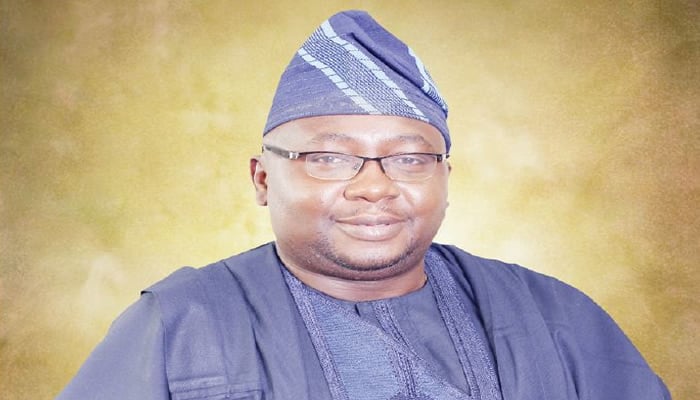
The Minister of Power, Bayo Adelabu